This work involves an investigation of the organism, the machine and their environments that lie at the centre of infrastructures of technology. It is led by three stories – one of an elephant, the other of a snail and the third of a coconut. At its core, the work asks the following: Why do ideas and objects leave the planet? Why do they return to us, and upon their return, how do they alter the way we relate to each other and to non-humans? And how do they sound?
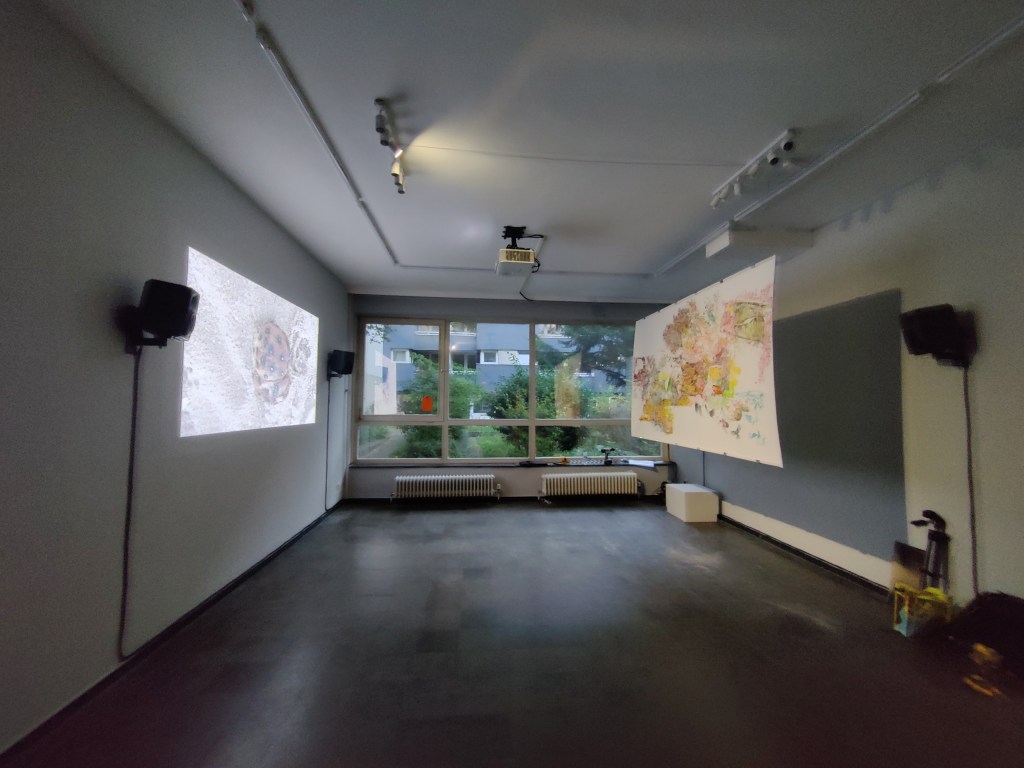
Every exit carries with it the possibility of return. Some ideas and objects return with the full gust of reason, affect and intent. The return is hardly straightforward, or easy to decipher. However, it is insistent and full of promise. It is this messy location of shape-shifting potentials that collide to tell stories of how to confront scale, and minimise implosions. And it is within these stories that organisms find it possible to resist being overwhelmed, and wading through its inundation. This work focusses on three situations where the exit into the cosmos has been coupled with the return to affect sociability and centre themselves around the organism within capital – the fully governed organism, the partially governed organism, and the organism refusing to be governed.

A public electrocution of a circus elephant in the US reminds us that the elephant is not always in the room, but in the cloud of smoke that fills and short circuits easy techno-social histories. A snail currently in India eats away at the city of Chennai during the monsoon despite large-scale efforts to cull it. And the coconut inscribed with suspect incantations returns from the sea onto the beach to create havoc and thrill.
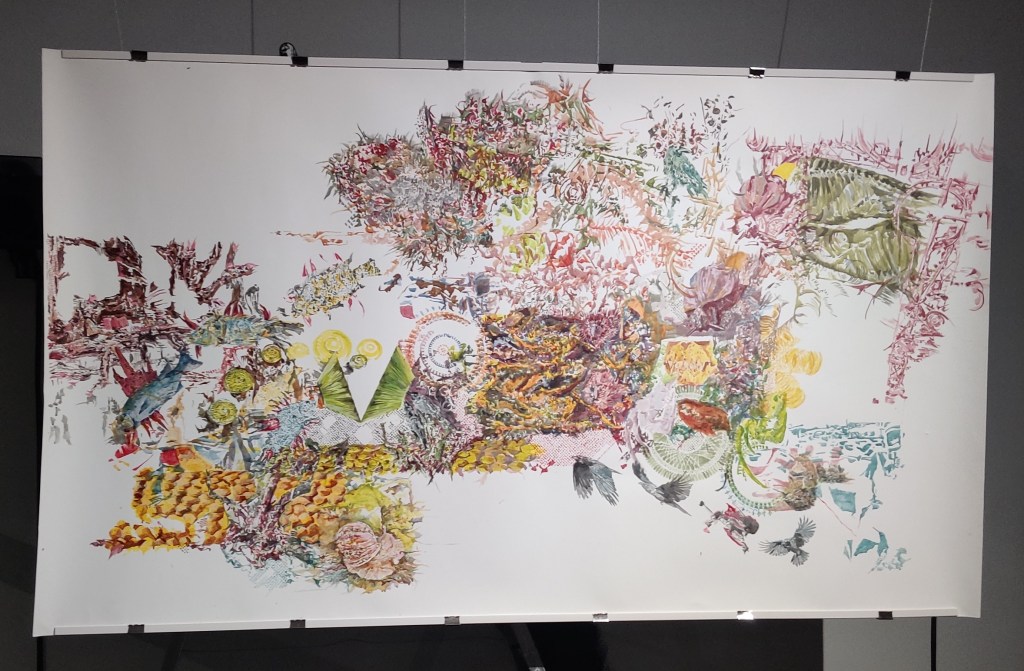
The coconut, the snail and elephant aid the construct trespassing between layers from undersea into the extra sky. They communicate, plot, form clandestine alliances and have a strong roll to play in the history of technology, history of movement, and of desire. All three have been ungrounded, and in that forcible dislocation have found ingenious ways to alter the way in which we relate to each other.
 Aarti Sunder